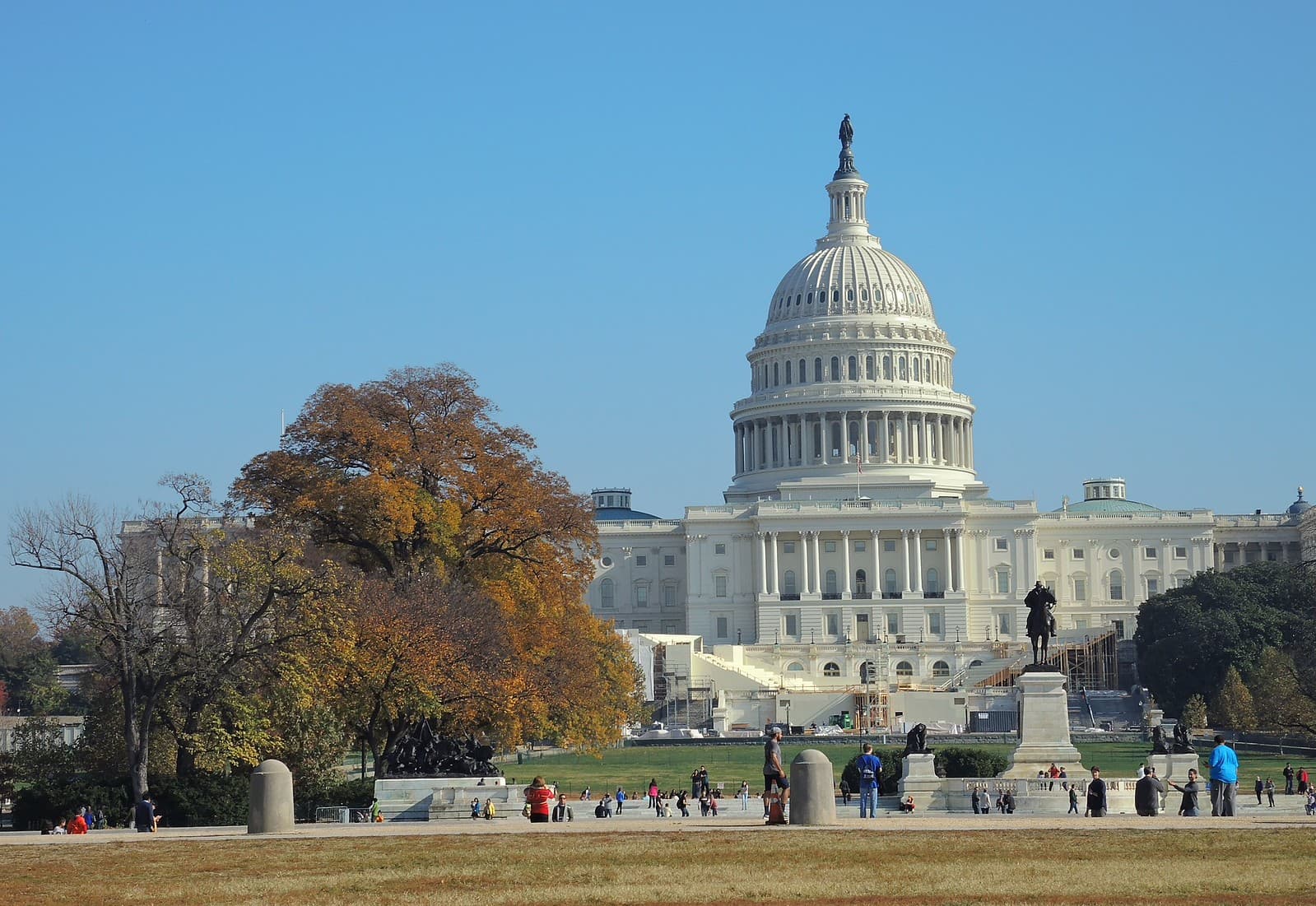
Democrats are setting out competing proposals for federal AI rules before November’s elections, even though they do not control Congress. Sen. Maria Cantwell’s framework calls for federal safety standards and audits, while Rep. Lori Trahan’s discussion draft would create a legal path for some people injured by AI-related conduct to seek damages from developers. Neither proposal is law, Politico reported.
The proposals, both released Wednesday, Oct. 7, are not a single Democratic plan. Cantwell’s framework does not include legislative text, and Trahan’s Clear Liability for Artificial Intelligence Misconduct Act, or CLAIM Act, is explicitly a discussion draft.
What rules does Cantwell propose for advanced AI?
Cantwell, the top Democrat on the Senate Commerce Committee, arranged her recommendations into six principles. They cover federal safety standards for frontier AI, continuing tests, independent audits, risk disclosures, incident reporting, developer accountability and international cooperation.
The framework recommends that the National Institute of Standards and Technology develop safety standards. It also proposes independent audits of covered models before release, with testing continuing afterward. Those are recommendations for possible federal policy, not requirements that Cantwell’s framework has put into effect.
Other parts focus on people who may be affected by AI systems. Cantwell’s proposals include protections for children and workers, transparency when AI is used in consequential decisions, meaningful human oversight and a chance for people to challenge an outcome. The framework does not establish those protections as existing rights.
If Congress turned the recommendations into law, developers of covered systems could face federal testing, audit, disclosure and incident-reporting duties. The proposal does not yet specify in legislative text which systems would qualify, how compliance would work or what enforcement powers would apply.
Roll Call reported that Cantwell’s framework has no legislative text and could be developed into more than one bill. That leaves major policy choices unresolved: the boundaries of the systems covered, the standards they would have to meet and how the government would verify compliance.
For developers, those choices could determine whether obligations apply before a system is released, as Cantwell recommends for audits, or continue during its use. For workers and people subject to consequential decisions, the framework describes possible routes to human review and a challenge process. The practical effect would depend on the final legislation and how it was enforced.
What would Trahan’s CLAIM Act draft change?
Trahan’s office says the draft would let people injured by certain AI-related conduct seek damages from developers through a federal cause of action, a legal basis for bringing a claim in court. The office says cases could be filed in state or federal court and that the proposal would preserve state law.
Under the sponsor’s description, a developer could face liability if an AI system caused injury through conduct that would amount to negligence, an intentional tort or a crime if a person had done it. The office also describes exceptions involving a user or a company that modified the system if that party intended the conduct or acted negligently.
Those terms could matter when an injury involves several actors: the system’s developer, a user and a company that changes the system. But the discussion draft’s precise boundaries—including which developers and injuries qualify, what a person would need to prove and how responsibility would be divided—remain open questions. The proposal does not guarantee compensation.
The two Democratic proposals address different points in the process. Cantwell’s framework looks to standards and safeguards around covered systems; Trahan’s draft focuses on potential legal claims after certain injuries. Whether either approach changes outcomes for developers or the public depends on further legislative work, not just the sponsors’ summaries.
Free newsletter
Get the morning briefing
Start each day with the AI stories that matter and why — a short, free email from our newsroom.
What other AI bills could advance?
There are also bipartisan proposals that could provide another route for debate. On Feb. 26, Cantwell and Republican Sens. Todd Young and Marsha Blackburn, along with Democratic Sen. John Hickenlooper, reintroduced the Future of AI Innovation Act. It would support voluntary standards and testing infrastructure, including work by NIST’s Center for AI Standards and Innovation and testbeds at national laboratories. Reintroduction does not mean the bill has been enacted.
On July 23, Trahan and Republican Rep. Jay Obernolte introduced the bipartisan FRONTIER Act. It proposed tiered requirements for frontier AI developers, including model documentation, risk management, independent audits, incident reporting and continuing assessments.
Obernolte said the bill would concentrate oversight on the largest developers and most advanced models while seeking to protect the public without undermining innovation. That is a co-sponsor’s account of the proposal’s aims, not an independent assessment of its likely effects.
The approaches differ. The Future of AI Innovation Act emphasizes voluntary standards, while Cantwell’s framework calls for enforceable federal standards. The FRONTIER Act is an introduced bill; the CLAIM Act remains a discussion draft. Neither status guarantees a hearing, a vote or passage.
How could Democrats move the proposals without control of Congress?
A Democratic House majority after the November elections could give the party greater influence over the chamber’s agenda and committee work, but it would not turn a framework or discussion draft into law.
House Democrats Bill Foster and Ted Lieu discussed a possible AI-focused select committee with Minority Leader Hakeem Jeffries, conditional on Democrats retaking the House, Nextgov/FCW reported. A panel could concentrate attention on AI, but its powers would depend on the House resolution that creates it. Nextgov/FCW reported that most House select committees do not have authority to advance legislation.
That limitation matters because AI measures can touch several committees, including Energy and Commerce and Science, Space and Technology. A select committee could coordinate attention, but it would not necessarily replace those committees or gain power to move bills. The establishing resolution would determine its role.
In the Senate, Majority Leader John Thune was working on an AI-focused bill, while Cantwell was not involved in its negotiations, Roll Call reported. Senate Commerce Committee Chair Ted Cruz has advocated a role for independent judges in AI safety and said a federal standard should address the patchwork of state laws, the publication reported. Those positions point to possible debate over the structure of federal oversight, not agreement on Cantwell’s plan.
The proposals also reflect different approaches within the broader debate. Roll Call characterized the White House and some congressional Republicans as favoring voluntary standards and self-regulation, unlike Cantwell’s call for enforceable federal requirements. Meanwhile, the bipartisan bills show that some AI legislation has sponsors from both parties, though their introduction alone does not establish that Congress will take them up.
The near-term test is whether lawmakers move any proposal from a framework, draft or introduced bill to hearings, markups and legislative text. An election could change which lawmakers control committee agendas; it would not resolve the proposals’ scope, enforcement mechanisms or prospects for bipartisan support.
Comments
Comments are written by readers. They are not reporting or opinion from AI News.
Share your view on this story. Criticise ideas and public records, not other readers.
Comments appear once a moderator approves them.
Community guidelines
More in our terms and privacy policy.
Comments close on October 16, 2026.
No comments yet. Start the conversation.