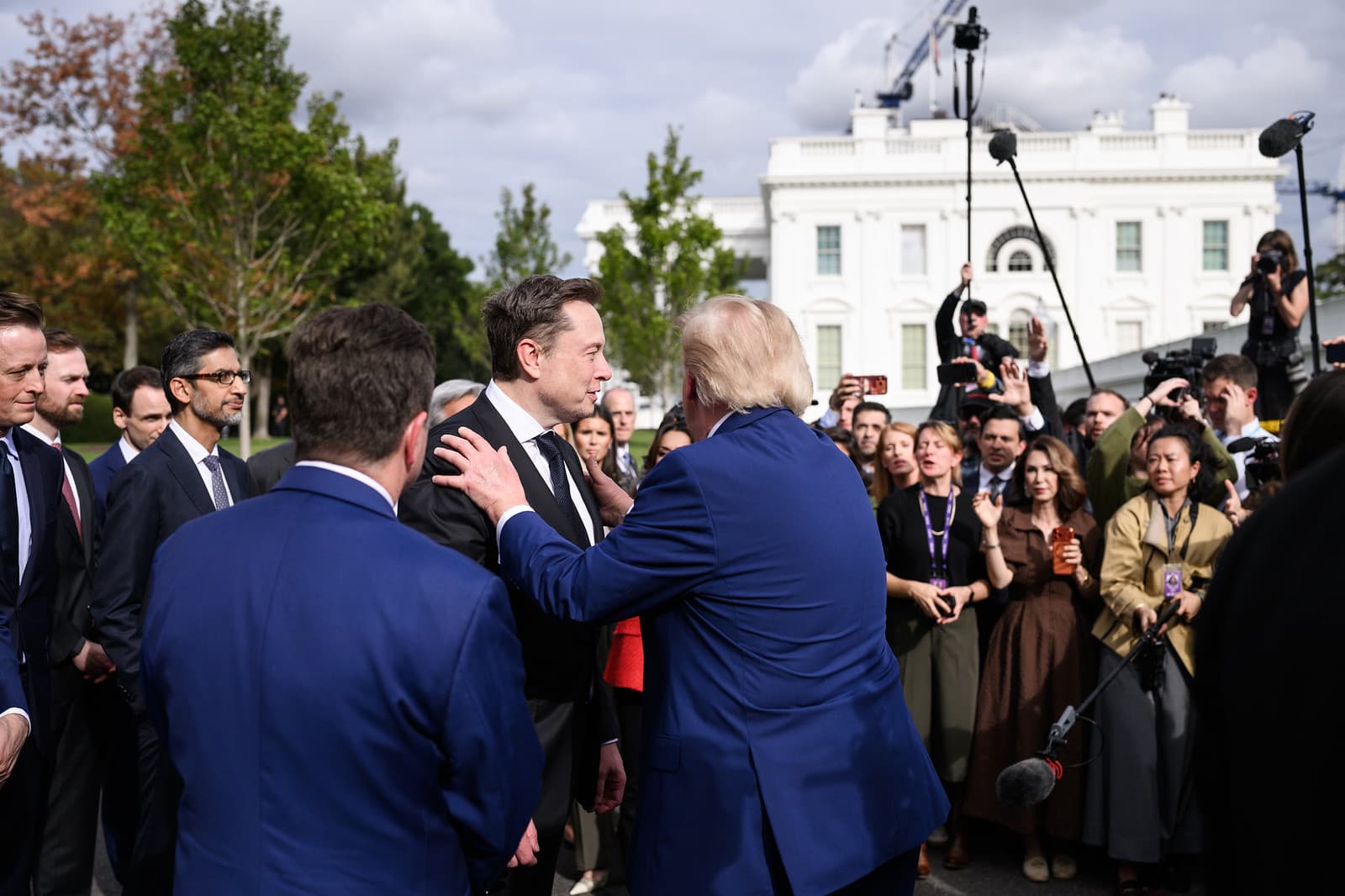
The White House’s Super Intelligence Force has not been shown to have binding power over AI companies. President Donald Trump announced it on Oct. 4 as a coordinating body; Semafor reported that it has 120 days to assess AI risks and opportunities and outline federal responsibilities. Those are assignments, not a grant of authority to compel private firms to act.
Trump’s description of a separate industry accord as morally binding does not give the force legal powers. The distinction matters: the task force’s name and its deadline are not evidence that it can regulate companies.
What power has the force been given?
The force’s reported work is coordination and a report. Semafor, citing a Wall Street Journal report, said the group is to deliver its assessment within 120 days. That could inform future policy, but a report is not itself a rule, and the public description does not say the group can issue regulations, impose penalties or require companies to change their conduct.
That gap is the central test. A formal charter or later legal instrument could clarify or expand the force’s role; the available reporting does not establish one. Until then, treating the word “force” as shorthand for a regulator would get ahead of the evidence.
A coordinating group could still shape government decisions by bringing agencies and outside stakeholders into the same process. But that is different from receiving new authority to enforce requirements on AI developers. The question is not whether the group may influence policy; it is whether it has been empowered to make companies comply. The announcement and reported assignment do not show that it has.
What does the binding label actually cover?
Three separate actions are easy to blur: an executive order, a company accord and the task force announcement. The order, signed Sept. 29, directs executive agencies to use Super Intelligence and SI instead of Artificial Intelligence and AI in specified communications and documents, to the extent permitted by law. It also sets a 60-day deadline for the White House science adviser to propose legislative language for a federal definition. Those steps concern government terminology and a proposed definition, not requirements for private firms or the force’s legal basis. Nextgov/FCW’s account describes the order and the separate accord.
Free newsletter
Get the morning briefing
Start each day with the AI stories that matter and why — a short, free email from our newsroom.
The accord is the document Trump characterized as morally binding. It calls on participating companies to use internal controls and oversight, external audits and board-level review. Nextgov/FCW described it as legally unenforceable and without penalties. Those commitments may encourage companies to adopt safety processes, but they do not establish government enforcement of those processes.
The administration’s case for relying on companies deserves a fair hearing. Vice President JD Vance told Nextgov/FCW, “The solution to some of the AI risks is for you guys to take the risk seriously, not to come to the government for a regulatory regime that may make things worse if it’s not smart and careful”. Poorly designed rules can have costs, and companies developing AI have technical knowledge that policymakers may need. But that argument supports consultation; it does not turn a voluntary accord into enforceable law or confer authority on the task force.
What evidence would change the verdict?
The rebranding offers a useful example of why names should not be mistaken for policy. Euronews reported that Elon Musk said his company would change its name from SpaceXAI to SpaceXSI, but its websites and social accounts had not changed at the time of the report. That is evidence of a stated naming plan, not evidence that the task force can direct private companies.
The verdict is therefore unproven: the public record does not establish binding authority for the Super Intelligence Force over AI firms. The evidence that could change that conclusion is concrete—a formal charter or legal instrument specifying the force’s powers, followed by actions that use those powers. The report’s findings, any resulting agency rules or legislation, and public evidence that companies carried out the accord’s audit commitments would each show more than an announcement does.
Until then, the force should be judged by what has been assigned: coordination and a report. A new label, an industry promise and a future assessment may shape debate, but none demonstrates power to make AI companies comply.